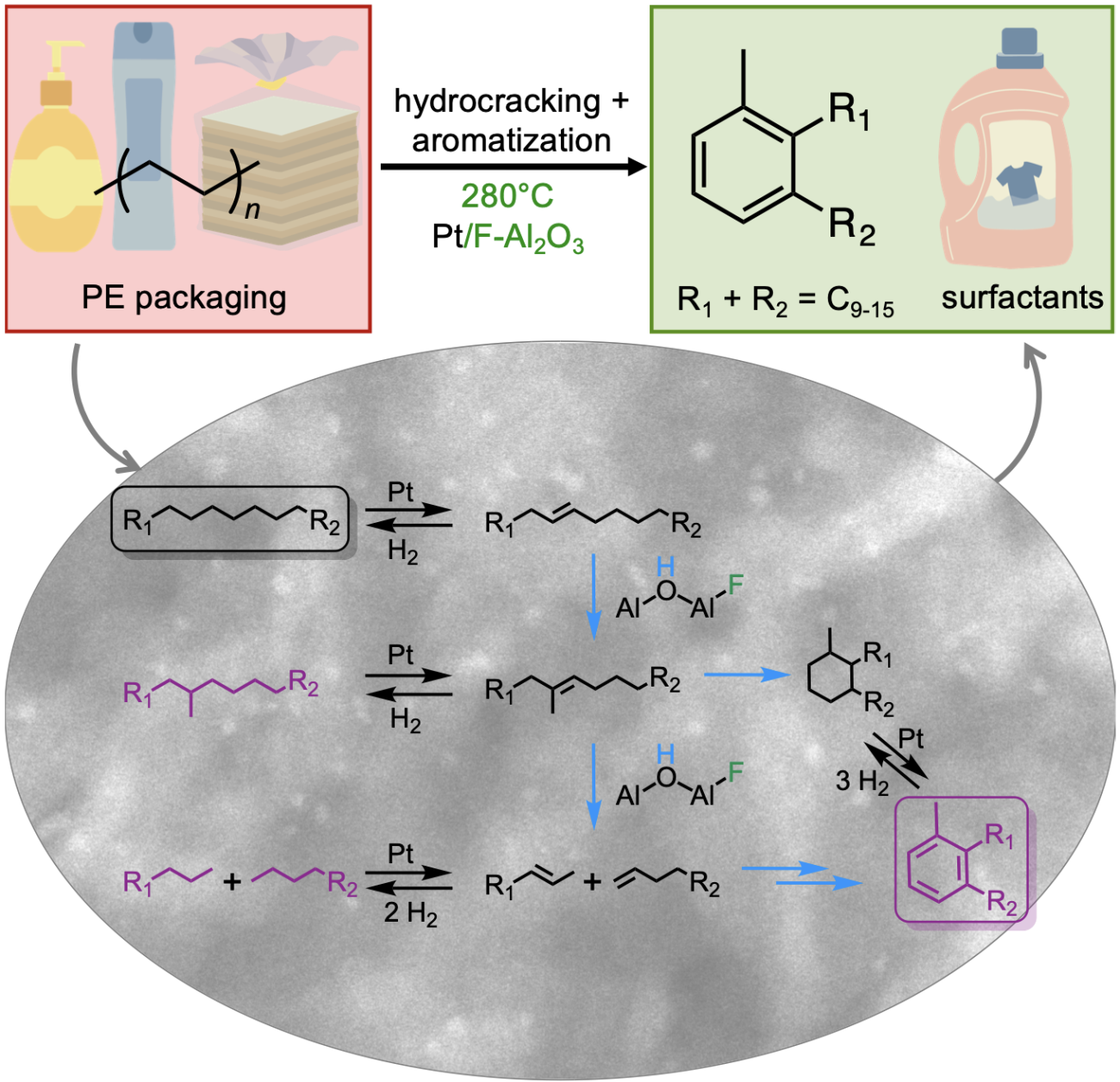
Bifunctional tandem catalytic upcycling of polyethylene to surfactant-range alkylaromatics Bifunctional catalysts improve the viability of chemical upcycling for waste polyolefins to value-added surfactant-range alkylaromatics.
Mass Transfer in Catalytic Depolymerization: Serendipitous Processivity in Stagnant and Stirred Melts The study predicts the effects of diffusion limitations on co-reactant transport to the catalyst and on chain egress after scission.
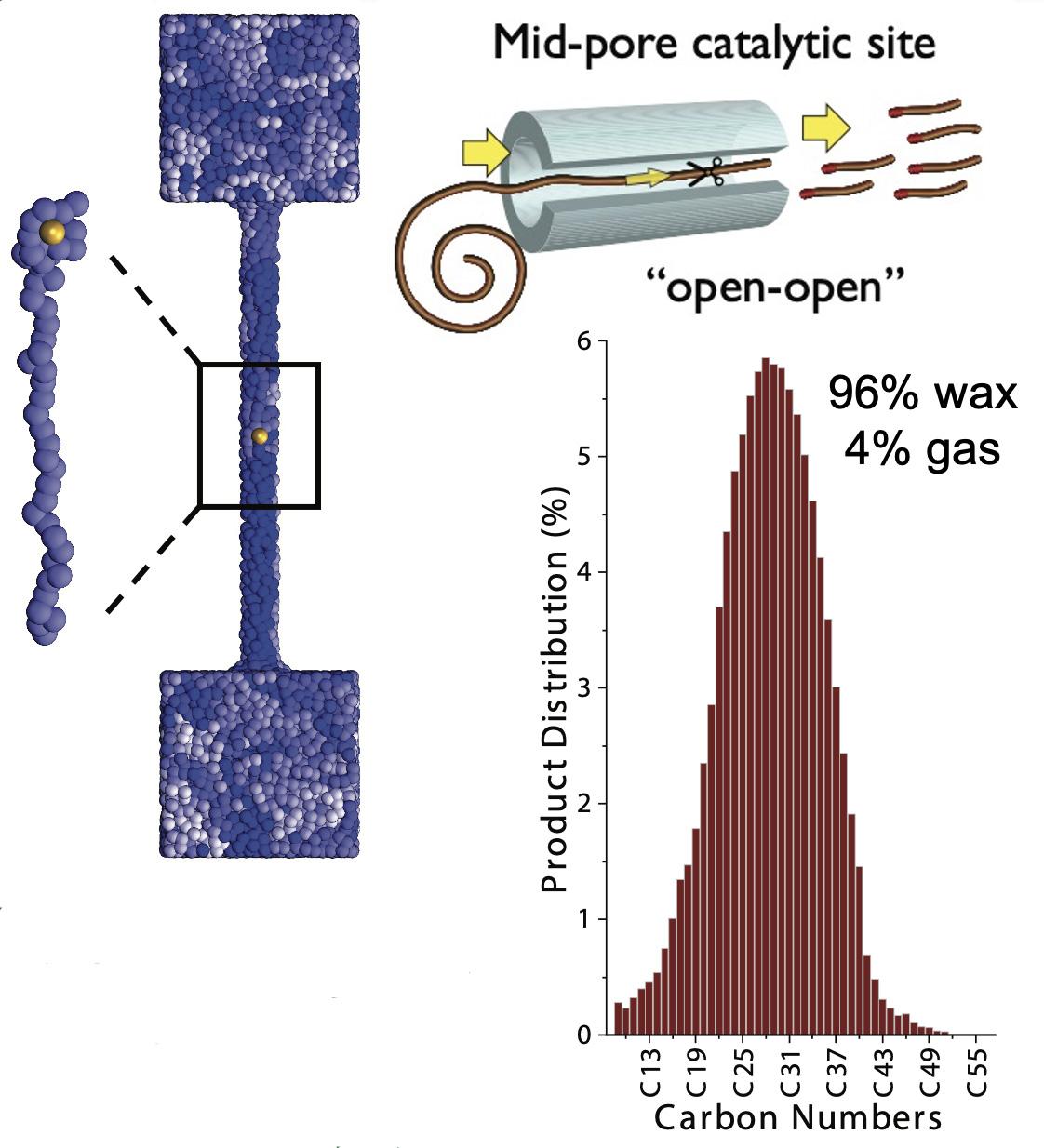
Superior Deconstruction of Polyolefins by a Catalyst with an “Open-Open” Mesoporous Architecture The new mSiO2/Pt/mSiO2 catalyst efficiently uses H2 for polyolefin deconstruction, with >96% of H2 generating C28-average waxes and preventing gas (especially methane) formation, key for enabling a circular plastic economy.
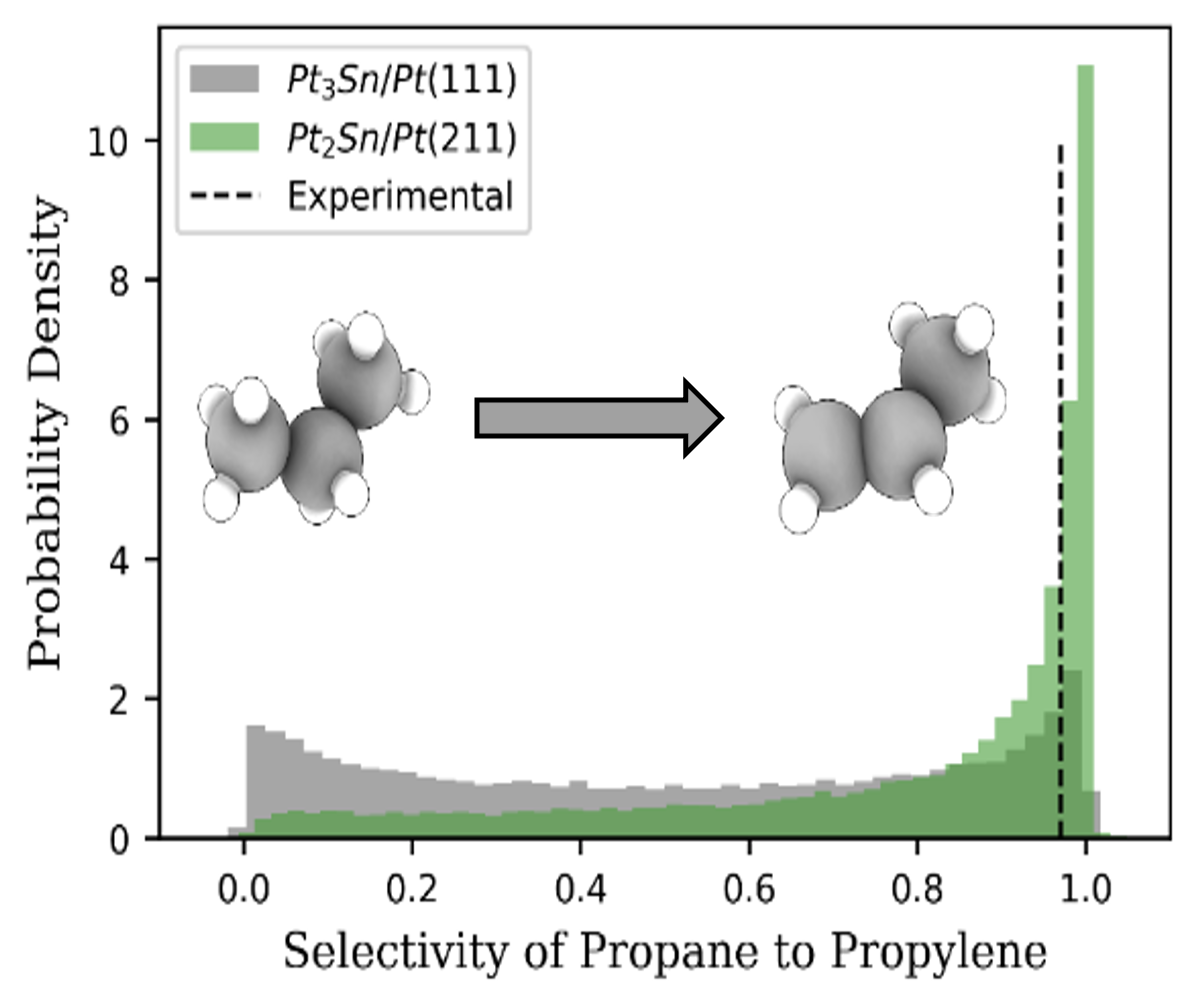
Understanding the effect of Tin alloying on Pt-based catalysts for alkane dehydrogenation and hydrogenolysis Addition of Sn to Pt-based catalysts reduces coke production during propane processing. Sn addition also leads to a reduced activity across all surface facets of a catalyst particle; however, specific modification is surface facet dependent.
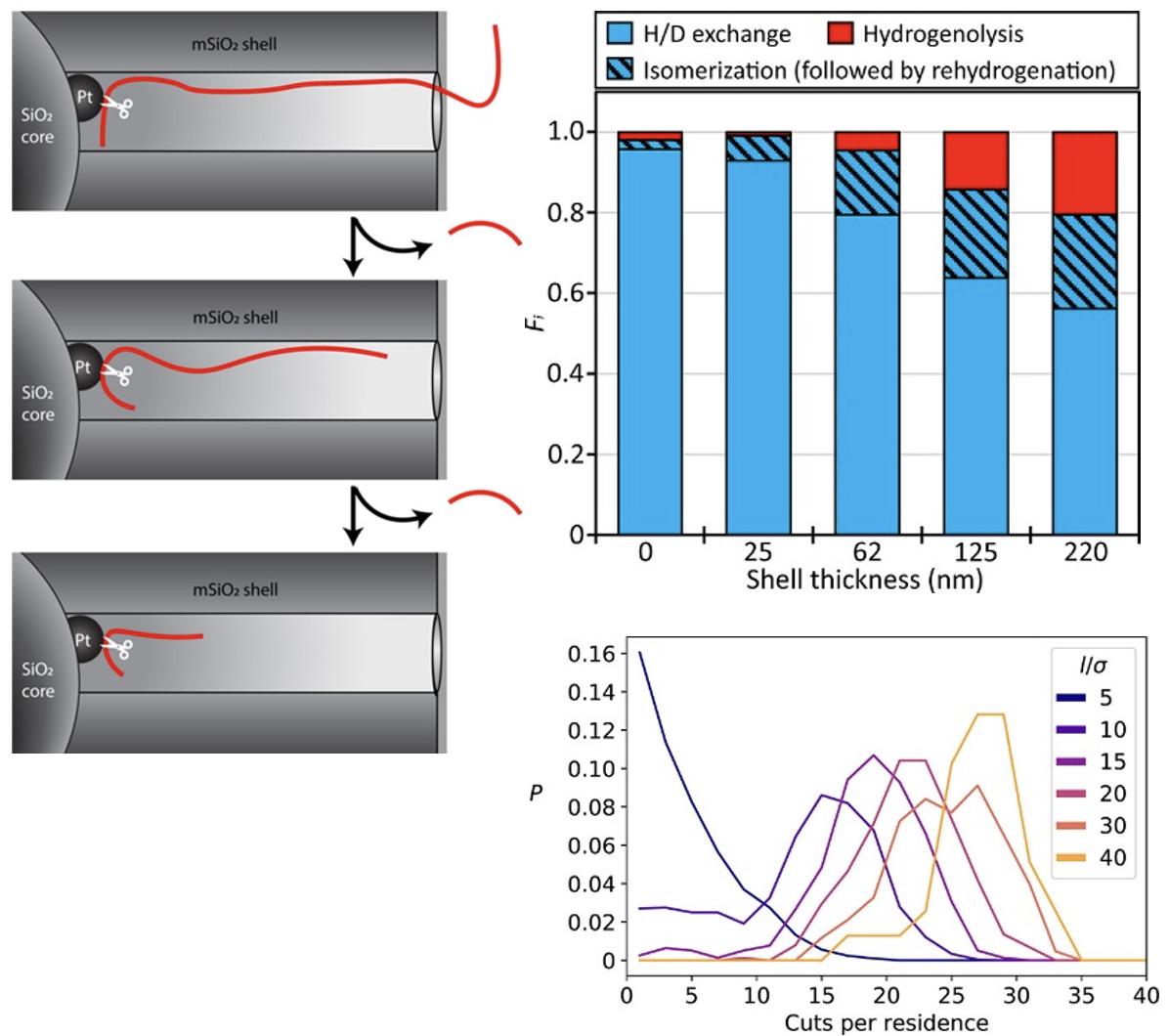
Long Mesopores are Key for Selective Polymer Deconstruction Processivity provides a catalyst-design strategy to improve selectivity in polymer deconstructions. Insight into architectural features of porous catalysts, namely the distance through a pore to precisely placed active sites, enables catalyst design to enhance selectivity in polymer upcycling.
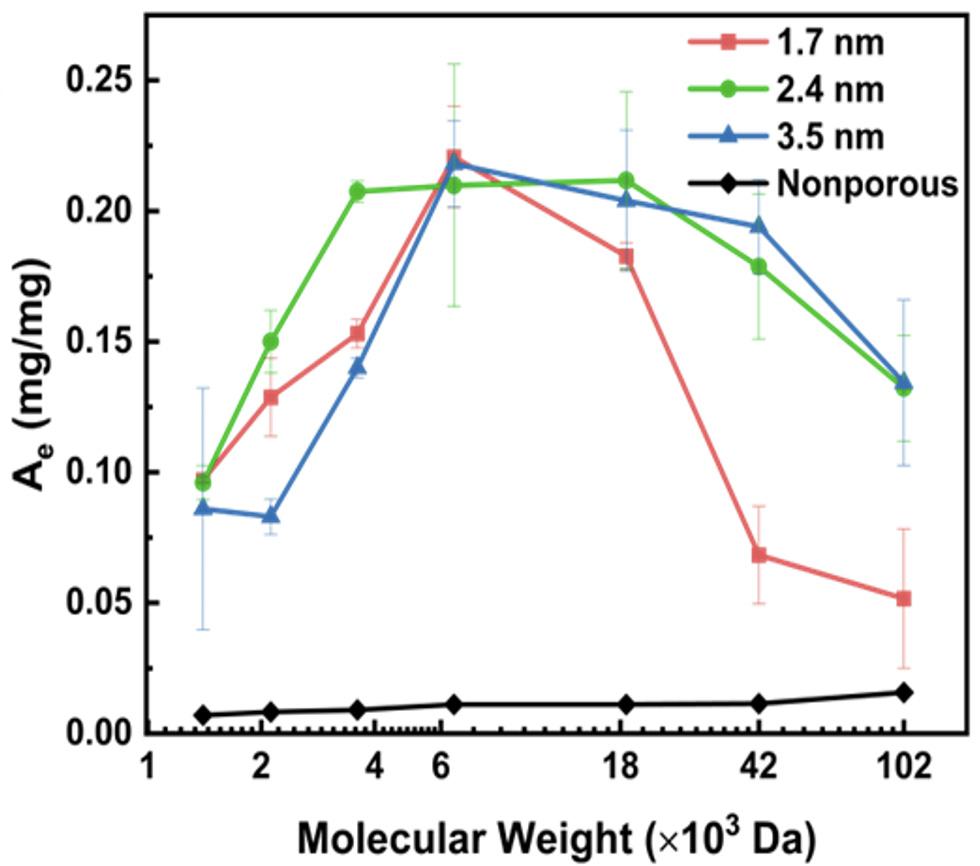
How Nanochannels Help Polymer Upcycling Catalysis Spectroscopic and scattering experiments measured kinetics of polymer adsorption into pores and product desorption out of the pores for a mesoporous-shell/cleavage-site/solid-core catalyst, revealing that chain length and pore diameter govern the rates.
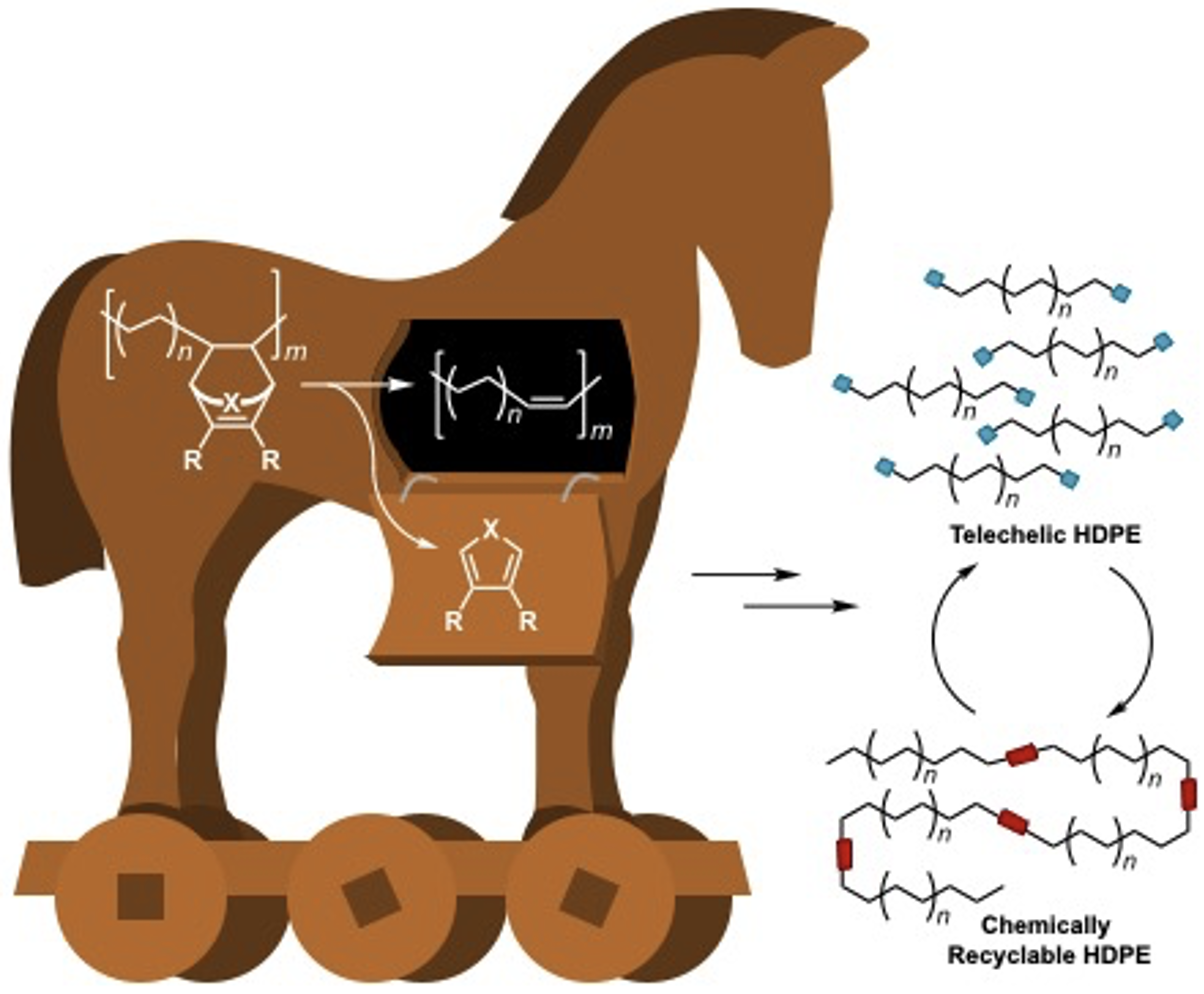
A “Trojan Horse” Route to Chemically Recyclable Polyolefins Chemically recyclable high-density polyethylene (HDPE) was synthesized from partially unsaturated polyethylene, generated from a thermal retro-Diels-Alder deprotection of norbornene-containing PE as the “Trojan Horse."
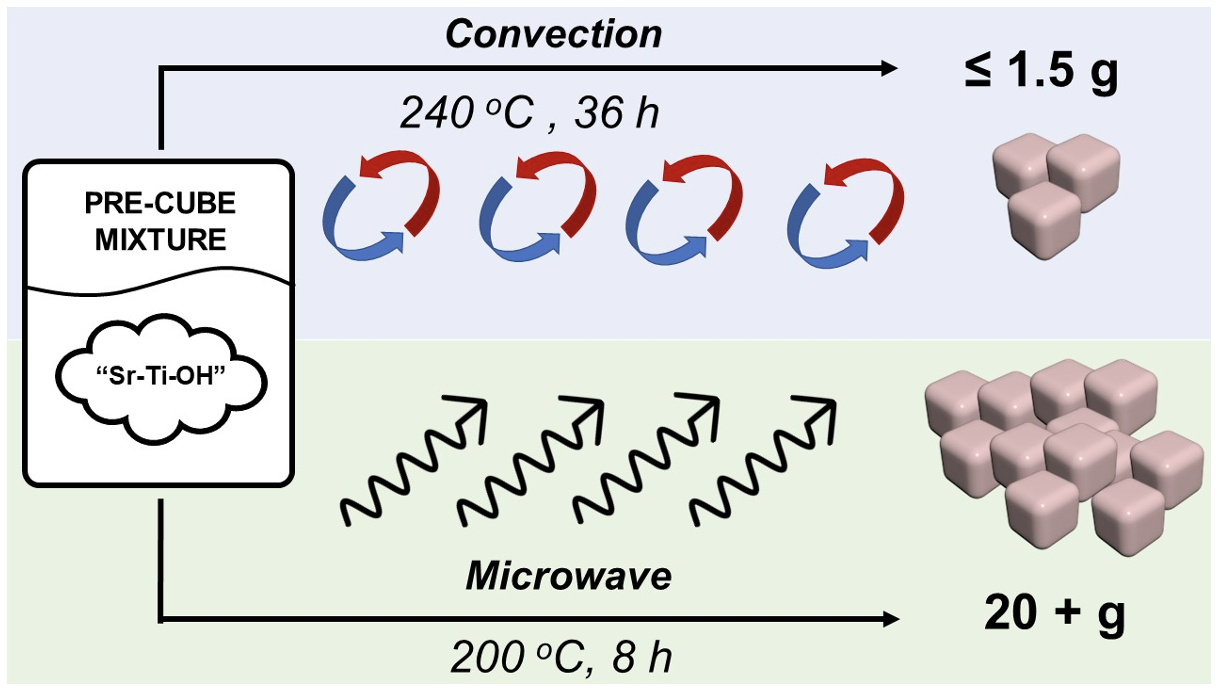
Microwave-Assisted Synthesis of SrTiO3 Nanocuboids without TiCl4 A microwave-assisted heating method was developed to afford 20+ g STO samples at milder conditions than previously attainable without TiCl4 and in only water.
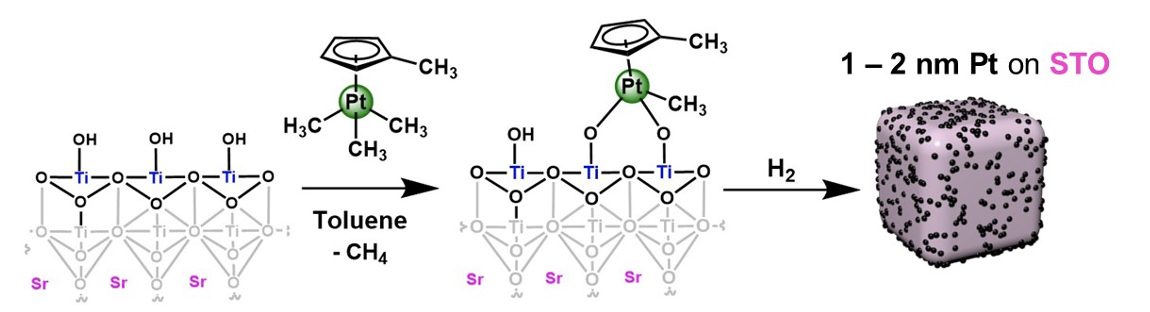
Scalable, Solution Phase Deposition of Nanoparticles for the Catalytic Hydrogenolysis of Plastic Waste A deposition method for Pt onto SrTiO3 (STO; Pt/STO) supports was developed that facilitates synthetic scale-up and retains the precision of atomic layer deposition.
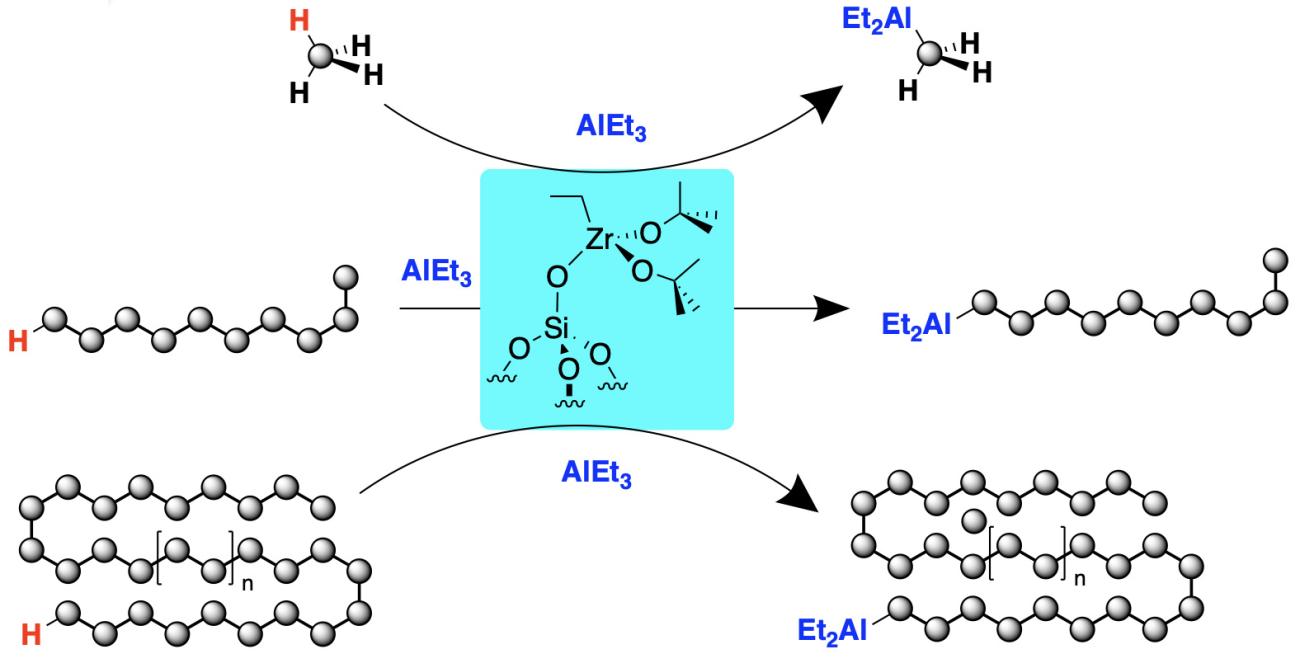
Earth-Abundant Reactant and Catalyst for Sustainable, Chain-End Functionalization of Small and Large Aliphatic Hydrocarbons Saturated hydrocarbons are catalytically and selectively transformed into organoaluminum intermediates via zirconium-mediated terminal C–H bond cleavage and C–Al bond formation, as a new functionalization method that complements oxidation, borylation, and silylation.