CMI researchers at Oak Ridge National Laboratory conducted the research for this highlight
Innovation
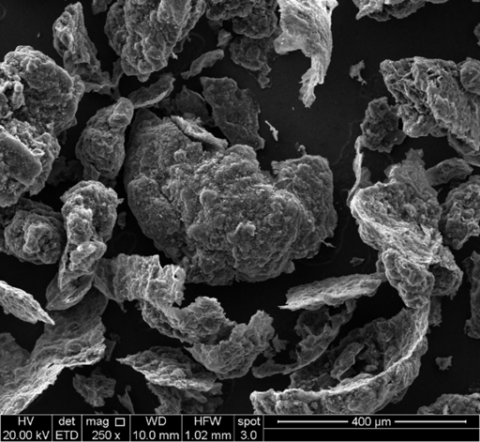
A new processing method uses CuCl2 salt as a reactive surface area enhancer that increases cross-linking of polyethylene (PE) melts to increase the yield of graphitizable char.
Achievement
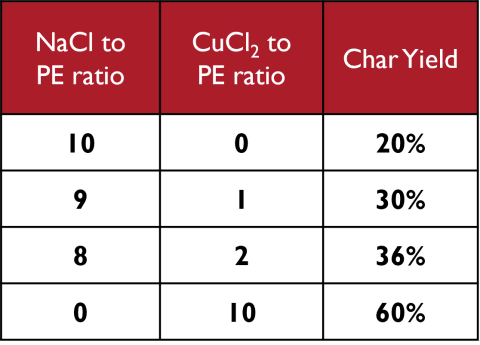
The yield of graphitizable PE char was increased three-fold to 60% by weight by using CuCl2 salts to increase the effective surface area of PE melts during crosslinking and promote additional cross-linking that cannot be achieved when chemically inert salts (e.g., NaCl) are used.
Significance and Impact
Recent technoeconomic assessments by CMI indicate that improving PE char yields is a critical step for improving the energy efficiency and costs of chemical polarization induced graphitization (CPIG) of PE over conventional Acheson-based graphitization of pet coke feedstocks.
Hub Target Addressed
Scalable materials processing for persistent challenges in graphite materials.