CMI researchers at Idaho National Laboratory, University of Arizona, and OLI Systems conducted the research for this highlight
Innovation
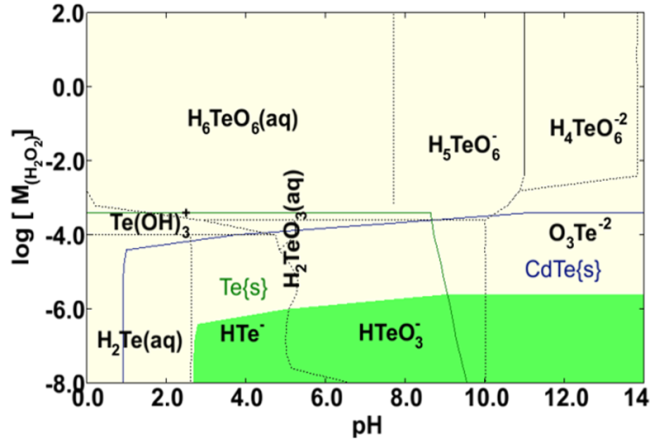
A predictive thermodynamic modeling base upon the Mixed-Solvent Electrolyte framework has been developed to optimize the energy and resource efficiency of an electrochemical (EC) recycling process for end-of-life CdTe photovoltaics (PVs)
Achievement
The thermodynamic simulations incorporating all key subsystems enabled identification of the optimal operating window, in terms of process conditions such as temperature, pH, and acid concentration, for selective separation of value metals (Te and Cd) from complex feedstock while minimizing mineral acid usage.
Significance and Impact
Energy-efficient EC-driven CdTe PVs recycling could support resilient supply chains of critical semiconductor materials. A manuscript is under review.
Hub Target Addressed
Developing and applying scientific tools to accelerate technology