CMI researchers at Idaho National Laboratory conducted the research for this highlight
Innovation
Comparing the impacts of rare earths on bacteria important for bioleaching and for wastewater treatment.
Achievement
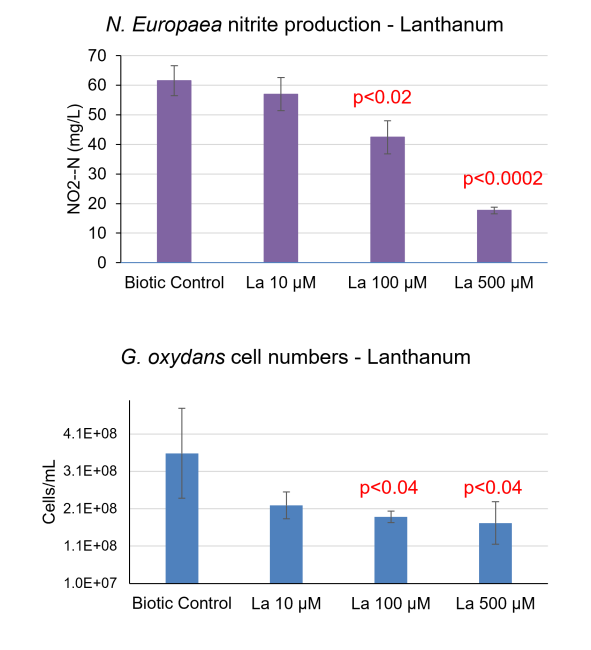
Mickey Leland Energy Fellowship intern observed that bioleaching bacterium Gluconobacter oxydans was significantly more tolerant to lanthanum salt addition than ammonia oxidizing bacterium Nitrosomonas europaea.
Significance and Impact
- Results showed that bacterial tolerance to rare earth exposure differs between individual species.
- Student learned about critical materials and microbial ecotoxicity evaluation, and independent research and communication skills.
Hub Target Addressed
- Assessing economic, environmental, and social acceptance impacts.
- Training the critical materials workforce of the future.