CMI researchers at Idaho National Laboratory conducted the research for this highlight
Innovation
Comparing the impacts of adjacent lanthanides on anaerobic bacteria relevant to wastewater treatment.
Achievement
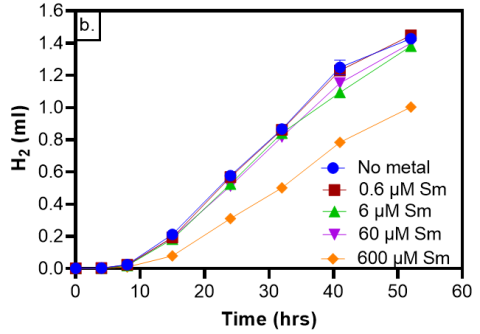
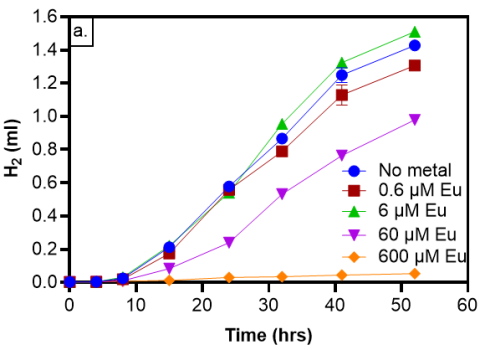
- Observed that despite chemical similarity, europium (Eu) and samarium (Sm) can exert markedly different impacts. For example, 60 µM Eu was inhibitory to Sporacetigenium mesophilum, but 60 µM Sm had no impact.
- Experiments with a closely related organism showed greater tolerance to both Eu and Sm, and no obvious difference between the two elements.
Significance and Impact
The results indicate that the impacts of REEs on anaerobic microorganisms cannot yet be generalized, and additional studies are needed to better understand potential disruptions to nutrient cycling processes due to increasing anthropogenic fluxes of REE.
Hub Target Addressed
Assessing economic, environmental, and social acceptance impacts.