CMI researchers at Ames National Laboratory conducted the activity for this highlight.
Innovation
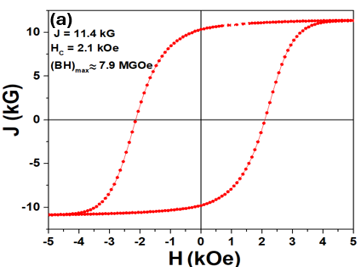
A record high coercivity of 2.1 kOe is achieved in a rare-earth-free Fe-rich compound, Fe5C2.
Achievement
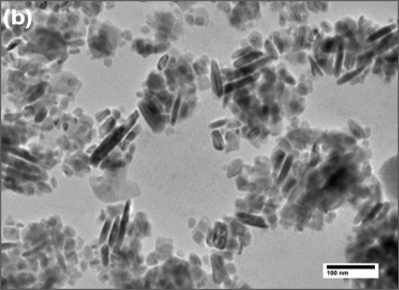
- Successful synthesis of Fe5C2 nanorods with diameters of approximately 20–30 nm and aspect ratios ranging from 1 to 5.
- The nanocrystals exhibit a coercivity of 2.1 kOe and a maximum energy product of 7.9 MGOe.
Significance and Impact
The significant coercivity, sufficient magnetization, high Curie temperature, and high thermal stability make Fe5C2 a promising candidate for a permanent magnet.
Hub goal addressed
Accelerated magnet discovery and maturation.