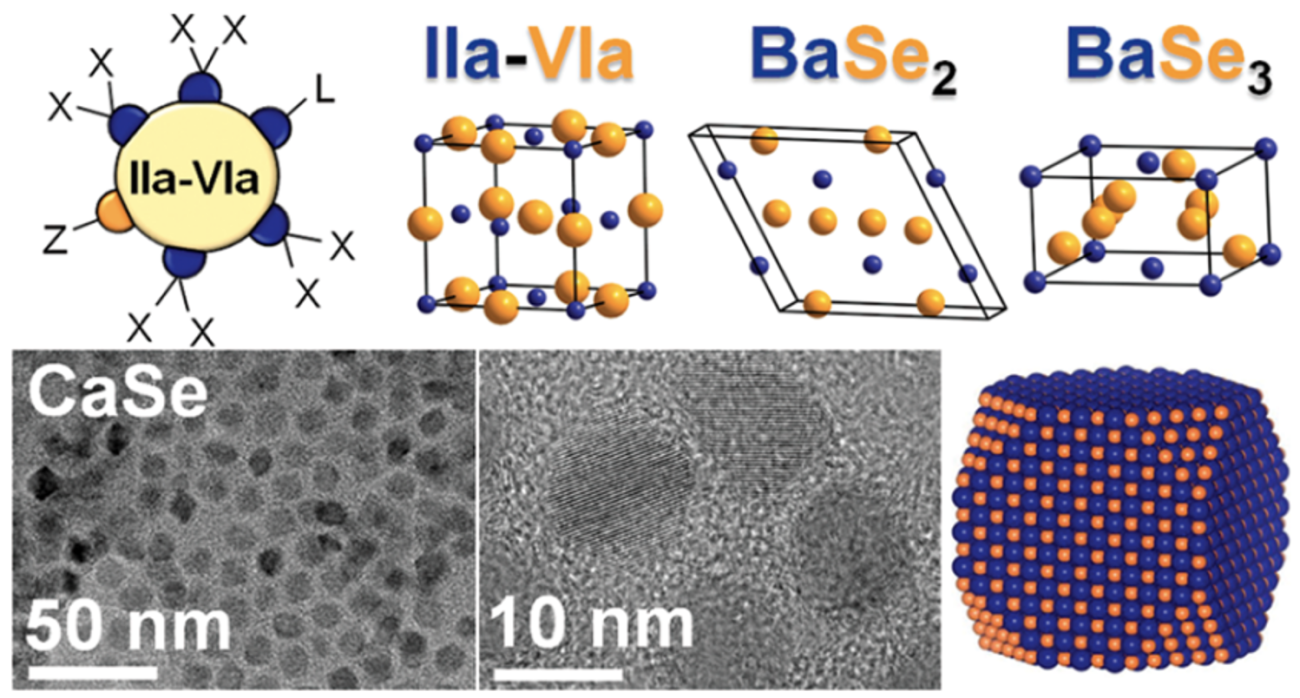
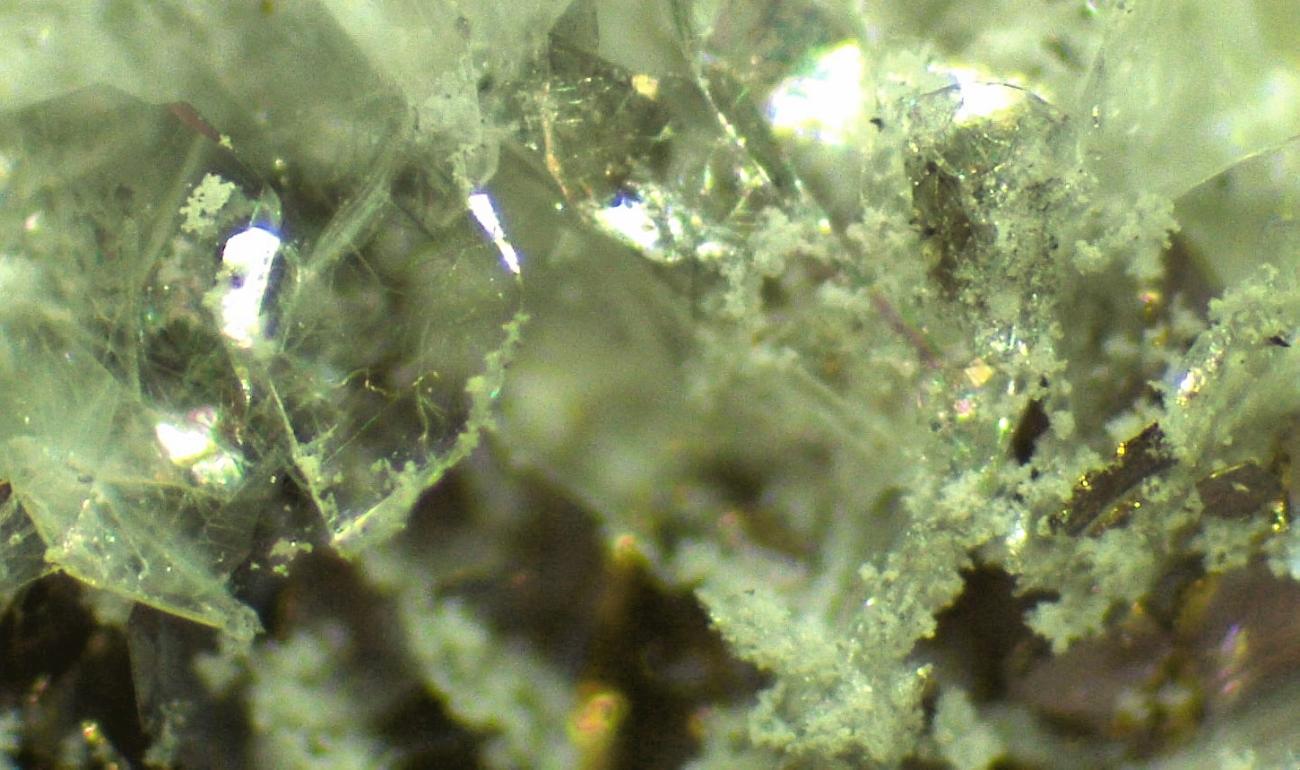
Fundamental research improves understanding of new optical materials Scientists from Ames National Laboratory and Iowa State University developed a colloidal synthesis method for alkaline earth chalcogenides.
Ames National Laboratory research project awarded $4.5M to understand and control properties of rare earth materials The Department of Energy recently announced the winners for the 2022 Chemical and Materials Sciences to Advance Clean-Energy Technologies and Transform Manufacturing (CEM) awards.
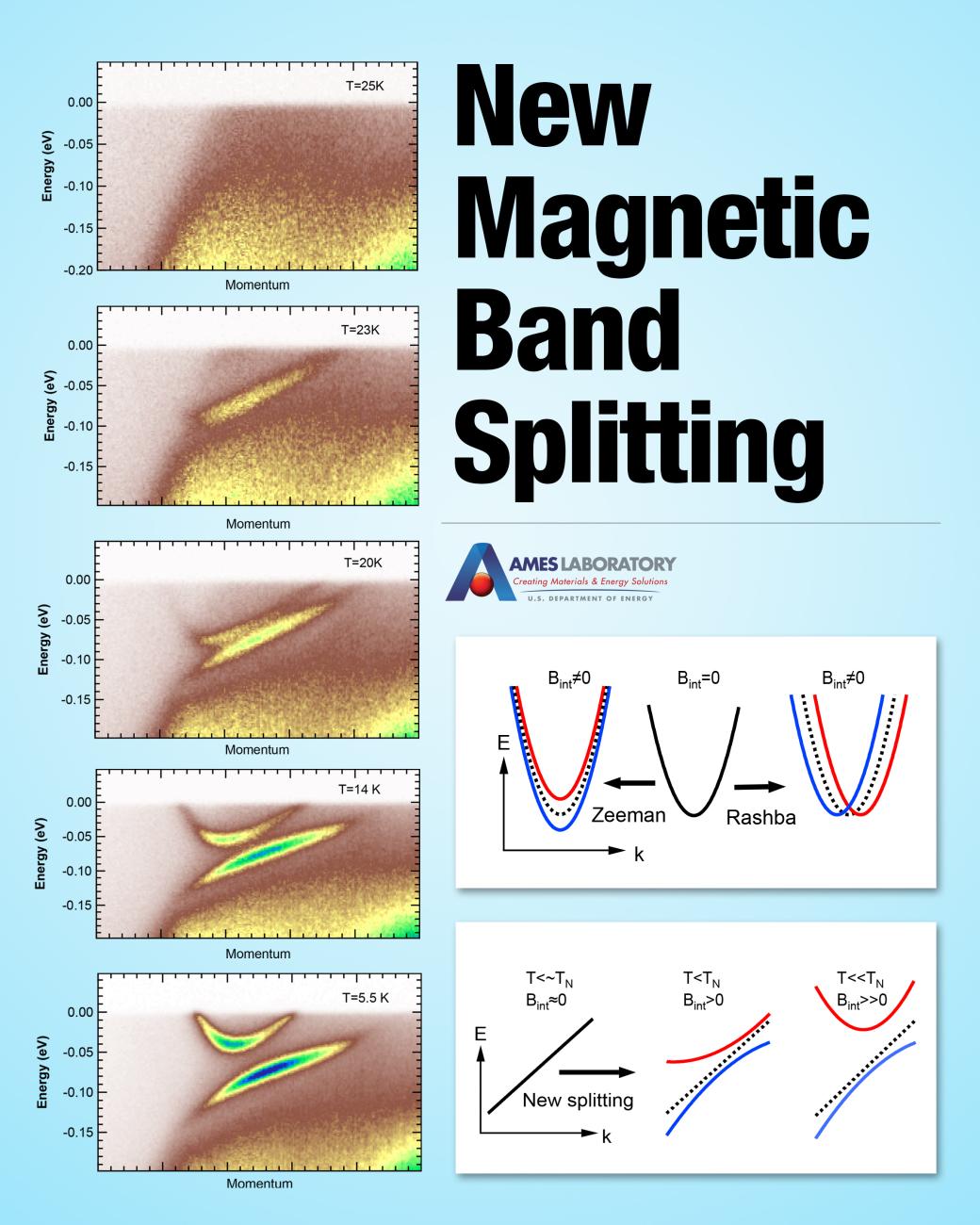
A breakthrough in magnetic materials research could lead to novel ways to manipulate electron flow with much less energy loss Newly discovered magnetic interactions in the Kagome layered topological magnet TbMn6Sn6 could be the key to customizing how electrons flow through these materials. Scientists from the U.S. Department of Energy’s Ames National Laboratory and Oak Ridge National Laboratory conducted an in-depth investigation of TbMn6Sn6 to better understand the material and its magnetic characteristics.
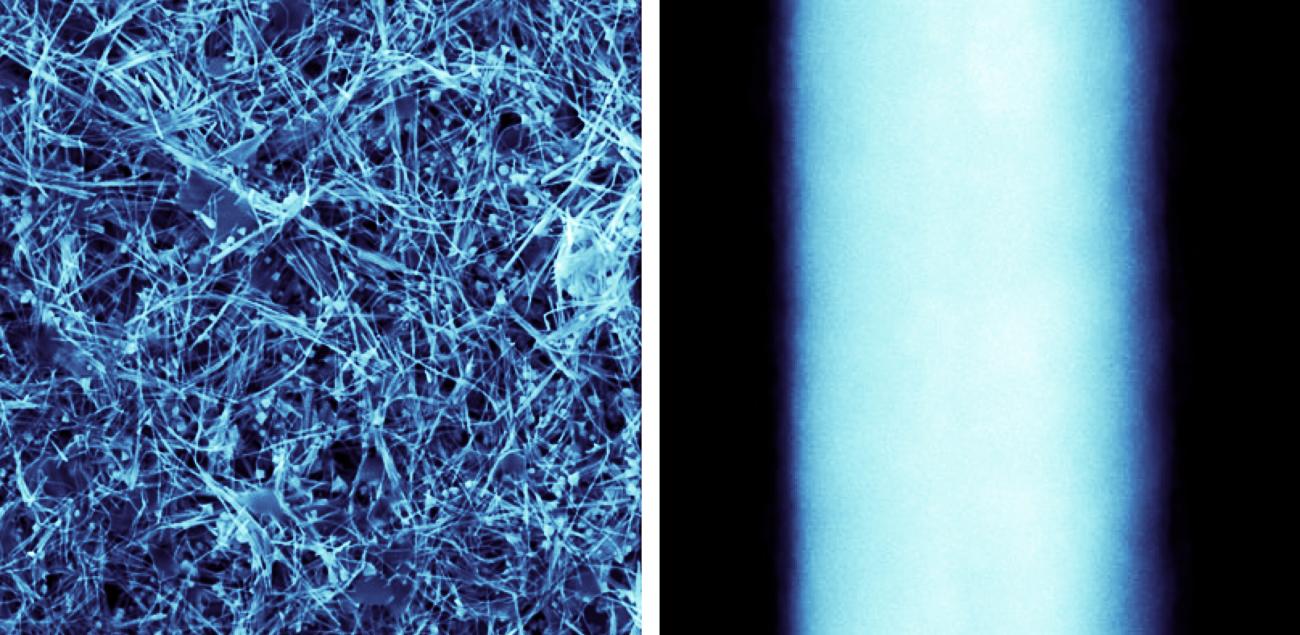
Scientists use copper nanowires to combat the spread of diseases An ancient metal used for its microbial properties is the basis for a materials-based solution to disinfection. A team of scientists from Ames National Laboratory, Iowa State University, and University at Buffalo developed an antimicrobial spray that deposits a layer of copper nanowires onto high-touch surfaces in public spaces.
New Fermi arcs could provide a new path for electronics Newly discovered Fermi arcs that can be controlled through magnetism could be the future of electronics based on electron spins.
Artificial intelligence paves the way to discovering new rare-earth compounds Artificial intelligence advances how scientists explore materials.
One scientist’s trash is another’s treasure: A laboratory’s “irritating” byproduct now supplies 2-D materials research scientists discovered that an unwanted byproduct of their experiments was an extremely high-quality and difficult-to-obtain substance sought by others.
First author: undergraduate internship at Ames Laboratory jump-starts research career Tyler Del Rose participated in the U.S. Department of Energy’s SULI program at Ames Laboratory while an undergraduate student at the University of Michigan.
For the sake of the planet, refrigeration tech needs an update Refrigeration keeps our food is fresh and our offices and living rooms are temperature-controlled thanks to vapor compression technology developed over a century ago, but it's reached its theoretical limit for potential energy efficiency. A group of scientists and engineers at the U.S. Department of Energy’s Ames Laboratory are inspired by the idea that refrigeration could be radically improved—made cheaper, cleaner, and more energy-efficient—by abandoning vapor compression for something entirely new: a solid-state caloric system.
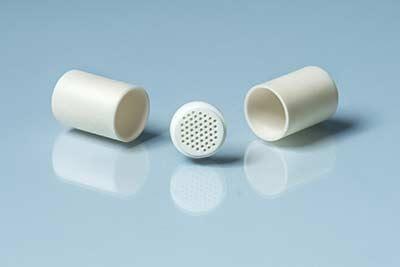
Crystallizing success: New crucible design makes materials research safer, more accurate When traditional methods weren't producing the desired results, Ames Laboratory physicist Paul Canfield set about designing a better method to strain samples during flux growth. The result is a new, commercially available crucible system that bears Canfield's name.