
 Basic Science
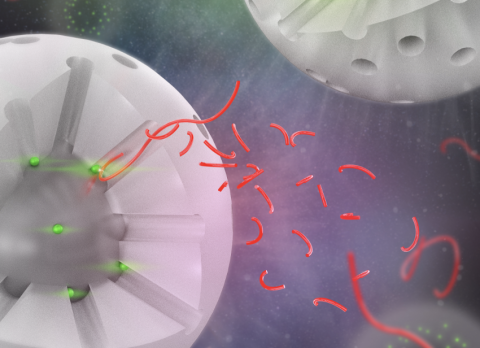
iCOUP scientists designed inorganic catalytic materials for polymer deconstruction to mimic behavior of processive enzymes, using mesopores to influence polymer adsorption and chain conformations, and active sites for chain cleavage localized within the pores, to generate narrow, tunable distributions of molecular-sized products.
 Applied R&D
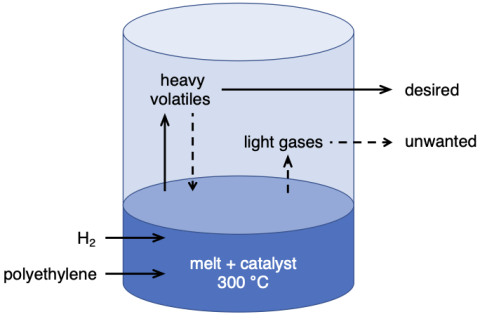
Practical plastic upcycling will require continuous conversions, involving addition of reactant and collection of products to pressurized reactors.
Reactor systems, designed to leverage reactive separations of products from the melted polymer reactants and implemented with EERE and LDRD funding, shows that continuous removal of products leads to high selectivity, a low greenhouse footprint, and better liquid yields than conversions in sealed reactors.
 Manufacturing/Commercialization
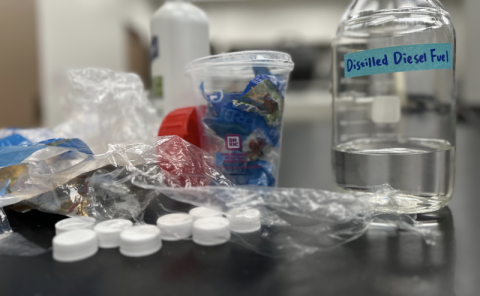
High yielding, direct synthesis of liquid hydrocarbons from plastic waste motivated the founding of Upcycling+ Inc. to commercialize these technologies. Mixed, non-recyclable, polyolefin plastics, diverted from landfills, is the feedstock for naphtha, kerosene, and diesel, enabling a cyclic plastic economy and low GHG fuel production for hard-to-electrify vehicles.